
Why Now Is the Perfect Time to Fix Your Windows Before the Cold Arizona Months Hit

A window starts sticking. Another one develops a cloudy patch you cannot wipe away. By late afternoon, the room facing west feels like it has been preheating since lunch. At that point, most homeowners start wondering whether they need a simple repair, a new piece of glass, or an entirely new window.
The honest answer depends on what has actually failed.
A window is made up of more than the glass you look through. It also includes the frame, sash, seals, weatherstripping, locks, and operating hardware. A problem with one of those parts does not automatically mean the whole window is finished. On the other hand, repeatedly repairing an old, poorly performing window can become the home-improvement version of putting fresh tape over the check-engine light.
Before deciding whether to repair or replace a window, you need to identify the problem, understand what caused it, and determine whether the proposed fix will actually restore the comfort, safety, and performance your home needs.
The Short Answer: Repair One Failed Part, Replace a Failing Window
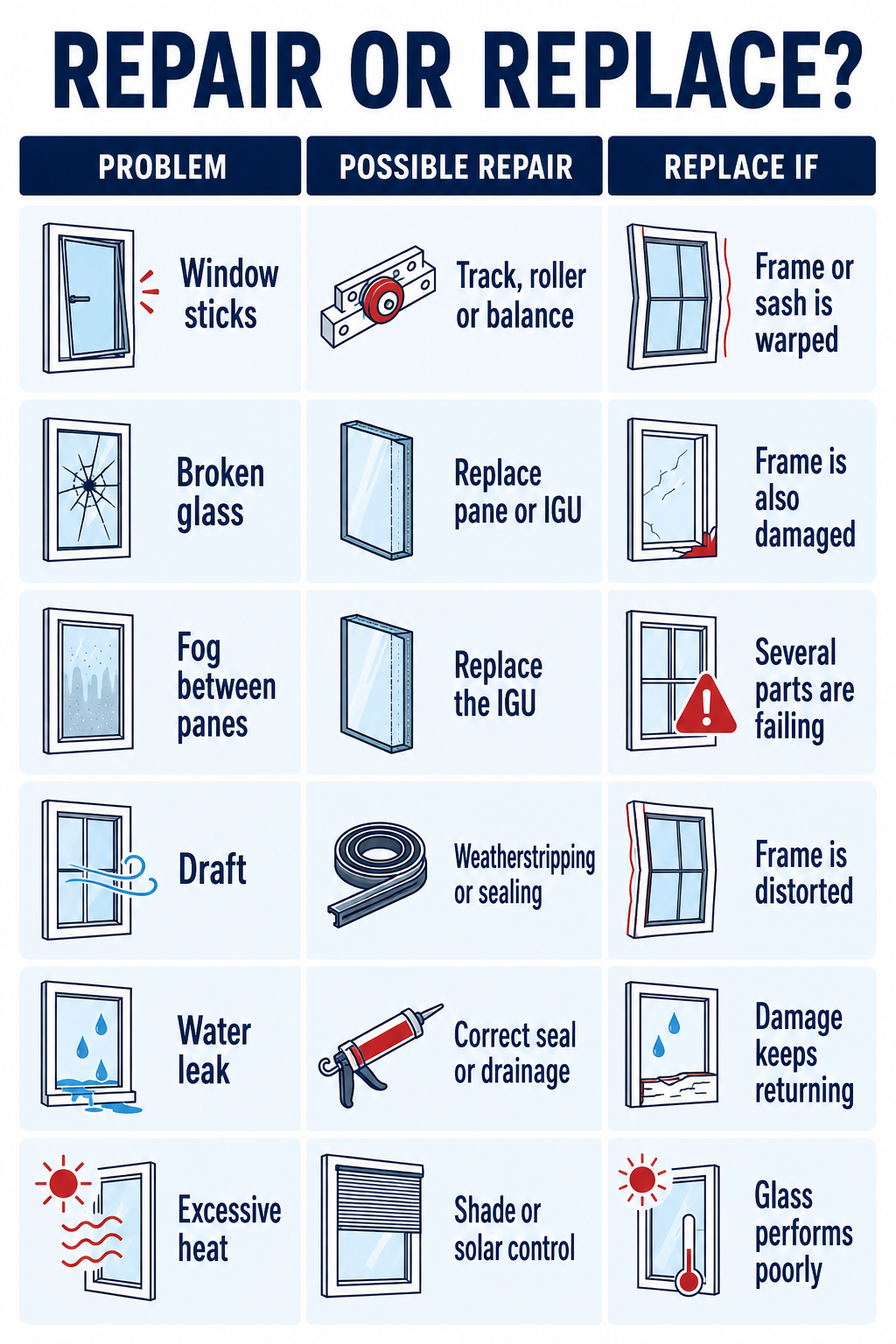
A repair usually makes sense when the problem is limited to one component and the rest of the window remains in good condition. Worn weatherstripping, a damaged lock, a faulty balance, or deteriorated caulk may be fixable without disturbing the glass or frame.
If the frame and sash are still structurally sound, cracked or foggy glass may also be corrected by replacing the glass or insulated glass unit, commonly called an IGU. That is different from removing and replacing the entire window.
Complete replacement becomes the better option when the frame is warped or damaged, water continues getting inside, several components are failing, or the window no longer provides the comfort and energy performance your Arizona home needs.
The goal is simple: use the smallest effective fix that solves the actual problem without paying to repair the same window again six months later.
First, Find Out Which Part of the Window Has Failed
Homeowners often talk about “the window” as though it were a single piece, but several different components work together to keep it secure, operable, and sealed against the outdoors.
The glass unit provides the view and helps manage heat transfer. In a double-pane window, the two panes and the sealed space between them form an insulated glass unit, or IGU. The sash holds that glass and may slide, lift, or swing open. Locks, rollers, balances, and other hardware control how the window moves and closes.
Around the sash, weatherstripping helps limit air leakage. The frame supports the entire assembly, while sealant and flashing help protect the opening where the window meets the wall.
Any one of these parts can fail while the others remain usable. A broken lock does not mean you need new glass, just as a failed glass seal does not always mean the frame needs to be removed. Before discussing cost, the first step should be identifying exactly which component is causing the problem.

What Your Window Problem Is Actually Telling You
The symptom you notice is a starting point, not a complete diagnosis. Two windows can appear to have the same problem while requiring entirely different repairs, so it helps to look at what is happening, where it is happening, and whether it has occurred before.
The Window Is Hard to Open, Close, or Lock
A stubborn window may need nothing more than cleaned tracks, an adjustment, or new hardware. Sliding-window rollers wear out, locks loosen, and balance mechanisms can fail after years of regular use. If the sash and frame remain straight and solid, replacing the affected component may restore normal operation.
Replacement becomes more likely when the sash or frame has warped, the window no longer sits square in the opening, or the same operating problem keeps returning. A window that cannot close or lock securely also deserves prompt attention. Besides being frustrating, it can create a security concern and prevent the window from serving as an emergency exit.
The Glass Is Cracked or Broken
Broken glass needs to be addressed, but it does not automatically require a complete new window. If the sash and frame are still in good condition, a professional may be able to replace the pane or insulated glass unit while leaving the rest of the assembly in place.
The right repair depends on whether the window contains single-pane glass, an IGU, tempered safety glass, or another specialized product. A temporary patch may help secure a small crack until service arrives, but it should not be treated as a permanent solution. Cracks can spread under stress, especially as Arizona glass repeatedly heats up during the day and cools at night.
There Is Fog or Moisture Between the Panes
Fogging that cannot be wiped from either side of a double-pane window usually means the seal around the IGU has failed. Moisture has entered the sealed space between the panes, and any insulating gas originally inside the unit may have escaped.

This does not necessarily mean the entire window must be replaced. If the sash, frame, and hardware remain sound, replacing the IGU may restore the view and insulating glass system. If the window is also warped, difficult to operate, poorly installed, or generally inefficient, replacing only the glass may leave the larger problem untouched.
Location matters here. Moisture on the room-facing surface can be related to indoor humidity, while temporary moisture on the exterior surface may simply be condensation. It is moisture trapped between the panes that points to a failed glass seal.
You Feel a Draft or Heat Around the Window
A draft may come from worn weatherstripping, deteriorated caulk, a sash that no longer closes tightly, or gaps between the window frame and wall. Those problems may be repairable if the rest of the assembly remains in good condition.
However, feeling hot near a closed window does not always mean outside air is leaking through it. Arizona sunlight can pass through the glass and heat the room even when the window is tightly sealed. In that situation, more caulk will not solve the problem. The issue may be the performance of the glass itself, particularly with older single-pane or clear double-pane windows that provide limited solar control.
Water Appears Around the Window
Water near a window can come from failed exterior sealant, blocked drainage channels, damaged flashing, poor installation, or a problem with the surrounding stucco, wall, or roof. The visible wet spot does not always reveal where the water entered.
Adding caulk wherever a gap appears may temporarily hide the symptom while trapping water or interfering with the window’s drainage system. Recurring leaks should be properly traced, especially after monsoon storms. If the window opening and surrounding wall are sound, a targeted repair may be enough. If water has damaged the frame or the original installation is fundamentally flawed, more extensive work may be necessary.
The Room Is Hot Even Though the Window Still Works
A window can open, close, and lock perfectly while still performing poorly against Phoenix heat. That is because mechanical condition and energy performance are two separate questions.
Weatherstripping, exterior shade, solar screens, and window coverings may improve comfort in some situations. They cannot, however, turn an older single-pane window or basic clear-glass unit into a modern insulated window with a properly selected Low-E glass package. If excessive solar heat is the real problem, replacing a lock or resealing the frame may make the window work better without making the room noticeably cooler.
Arizona Heat Changes the Repair-or-Replace Equation
Windows in Arizona do not all age at the same rate. The windows on the west and south sides of a Phoenix home generally endure more direct sunlight than those facing north or east. As the glass and surrounding materials heat during the day and cool afterward, repeated expansion and contraction can place additional stress on seals and other components.
That does not mean every sun-exposed window needs to be replaced. It means the location and pattern of the damage matter.

One failed window may have an isolated glass or hardware problem. Several similarly aged windows developing fog, brittle seals, or operating problems along the same side of the house may point to a broader pattern of wear. Monsoon-driven rain can also reveal weak exterior sealant, drainage problems, or installation defects that remain hidden during dry weather.
Arizona homeowners should also separate physical damage from inadequate performance. A window may still be structurally sound but allow far more solar heat into the home than desired. In that case, a repair could extend its usable life without addressing the hot room, fading furnishings, or demand placed on the air conditioner.
When Is a Window Repair Still Worth the Money?
A repair is usually worthwhile when the problem is isolated, the window remains structurally sound, and the fix is likely to provide several more years of reliable service. Replacing worn weatherstripping, faulty hardware, rollers, balances, or a damaged insulated glass unit can make good financial sense when the surrounding sash and frame are still doing their jobs.
The calculation changes when one repair leads directly to another. Replacing foggy glass may improve the view, but it will not straighten a warped frame. New weatherstripping may reduce a small gap, but it cannot correct a window that was installed poorly or no longer sits square in the opening.
Before approving a repair, ask three questions:
- What part has actually failed?
- Will this repair restore operation, appearance, energy performance, or only one of the three?
- How likely is the same problem to return?
There is no universal price at which replacement automatically becomes the better choice. Window size, glass type, accessibility, parts availability, and installation conditions all affect the comparison. The real question is whether the repair solves the underlying problem or simply buys a little time before the next service call.
Do You Need to Replace Every Window at Once?
No. If one window has failed and the others remain in good condition, there is usually no practical reason to replace the entire house just to keep that one window company.
A phased approach can make sense when the budget is limited or certain windows have more urgent problems. You might begin with broken or unsafe windows, followed by leaking units and those causing the greatest comfort issues. In Phoenix, that often means prioritizing the west-facing side of the home or the rooms used most during the afternoon.
Whole-home replacement becomes more reasonable when the windows are similar in age and condition, several are beginning to fail, or consistent appearance and energy performance are important goals. Replacing multiple windows together may also reduce repeated installation disruptions.
The decision should follow the condition of the windows and the homeowner’s priorities—not an arbitrary rule that every window must be replaced at the same time.
What a Proper Window Inspection Should Tell You
A useful inspection should do more than confirm that something looks wrong. It should identify which component has failed, what likely caused the failure, and whether the problem is isolated or part of a larger pattern.
You should also learn whether the existing frame can accept replacement glass, whether damaged hardware can still be sourced, and what the proposed repair will actually restore. A clearer view is not necessarily the same as restored energy performance, just as fresh caulk does not guarantee that a water leak has been corrected.
Most importantly, the recommendation should explain what happens if you wait. Some cosmetic problems can be monitored, while broken glass, insecure locks, active leaks, and windows that cannot serve as required exits deserve more immediate attention.

A Note from Travis
I am not going to tell you that every foggy pane or stubborn lock means you need a house full of new windows. Sometimes the honest answer is a repair, and sometimes replacing the glass is enough. But when the frame, installation, and glass are all working against you, another patch may only delay the same conversation.
The job is to figure out which situation you actually have and recommend the fix that makes sense for your home.
Frequently Asked Questions About Window Repair and Replacement
Can You Replace the Glass Without Replacing the Entire Window?
Yes. If the sash and frame remain in good condition, a professional may be able to replace only the broken pane or insulated glass unit. The type of glass and window construction will determine whether this is practical.
Does Fog Between the Panes Mean I Need a New Window?
Fog between the panes means the seal around the insulated glass unit has failed. You may need only a replacement IGU if the rest of the window is sound. Complete replacement may make more sense when the frame, hardware, or overall performance is also poor.
Is It Worth Repairing an Old Window?
Sometimes. Age is only one factor. A repair may still be worthwhile when the window is structurally sound, suitable replacement parts are available, and the repair will provide a meaningful amount of additional service. Several recurring problems may make replacement the better investment.
Can Caulk Fix a Drafty Window?
Caulk can seal certain gaps between the window frame and surrounding wall. It will not correct warped components, worn weatherstripping, failed glass seals, or poor installation. The source of the air leak should be identified before more sealant is applied.
Should I Replace All My Windows if Only One Has Failed?
Usually not. An isolated failure can often be handled on its own. Replacing several or all of the windows becomes more reasonable when they are similar in age, show the same problems, or no longer provide the comfort and performance you want.
How Can I Tell Whether Heat Is Coming Through or Around the Window?
Noticeable air movement may indicate leakage around the sash, weatherstripping, frame, or installation. Heat felt near tightly closed glass may be solar energy passing through the window instead. Because these problems require different solutions, a professional inspection can help determine whether sealing, shading, glass replacement, or complete window replacement is appropriate.
Get the Right Fix for Your Windows
The right solution may be a small hardware repair, a replacement insulated glass unit, or a completely new window. What matters is identifying the actual failure before paying for work that does not solve it.
If you are unsure what your windows need, Factory Direct Windows can inspect the problem and give you a straightforward recommendation. Contact us to schedule a free, no-obligation consultation for your Phoenix-area home. We will help you determine whether repairing the component, replacing the glass, or replacing the entire window makes the most sense.
Travis Hyre
A native Phoenician who now lives in Gilbert, Travis specializes in straightforward advice, retrofit window installations, and giving homeowners his personal cell number instead of sending them through a maze of commissioned salespeople. But everyone knows the real boss is Simba, his giant poodle, whose responsibilities reportedly include supervision, morale, and making sure Travis does not get too comfortable.